First-Time Renter's Checklist: Everything You Need for Your Tennessee Apartment

Renting your first apartment can feel exciting right up until the paperwork starts. Between lease terms, deposits, fees, move-in dates, utilities, and inspection checklists, many first-time renters realize quickly that apartment hunting is about more than finding a place that looks good online. The good news is that a little preparation goes a long way. If you know what to ask and what to document, your first Tennessee apartment experience can be much smoother.
The first step is understanding the full cost of the apartment before you apply. That means more than just monthly rent. You should ask what utilities are included, what fees are due up front, whether there are application charges, move-in costs, parking fees, pet fees, or recurring monthly add-ons. A place that looks affordable on the listing can feel very different once all required costs are added together.
Next, pay close attention to the exact lease terms. Ask how long the lease runs, what happens if you need to move early, how renewal works, and whether rent is likely to increase at the end of the term. First-time renters sometimes focus heavily on approval and price but forget that lease structure shapes the entire experience. A clear understanding now prevents stress later.
Before signing, it is also smart to ask how maintenance is handled. Find out how to submit repair requests, what counts as an emergency, and how quickly the property responds. Good maintenance support matters more than many renters expect, especially in your first apartment when everything is new and you may not know what is normal, urgent, or your own responsibility.
One of the most important first-time renter habits is documenting the apartment on day one. Do not rely on memory or a few quick photos. Record a full move-in video, room by room, and note every scratch, stain, dent, or pre-existing issue you see. Then send that documentation in writing. This step may feel tedious in the moment, but it can protect your deposit later.
It is equally important to keep everything in writing throughout the lease. If you give notice, ask for repairs, request an inspection, or dispute charges, do it by email or text rather than depending on verbal conversations. A written record gives you clarity and protects you if questions come up at move-out.
You should also understand the move-out process before you even move in. Ask whether there will be a checklist, what cleaning standards are expected, and how the final inspection works. When it is time to leave, do a deep clean, attend the walkthrough if possible, and provide your forwarding address in writing. Those steps improve your chances of getting your deposit back fairly.
Finally, remember that your first apartment does not need to be perfect. It needs to be manageable. The best first apartment is one that fits your budget, gives you clear lease terms, provides dependable maintenance, and lets you start building renter confidence without unnecessary stress.
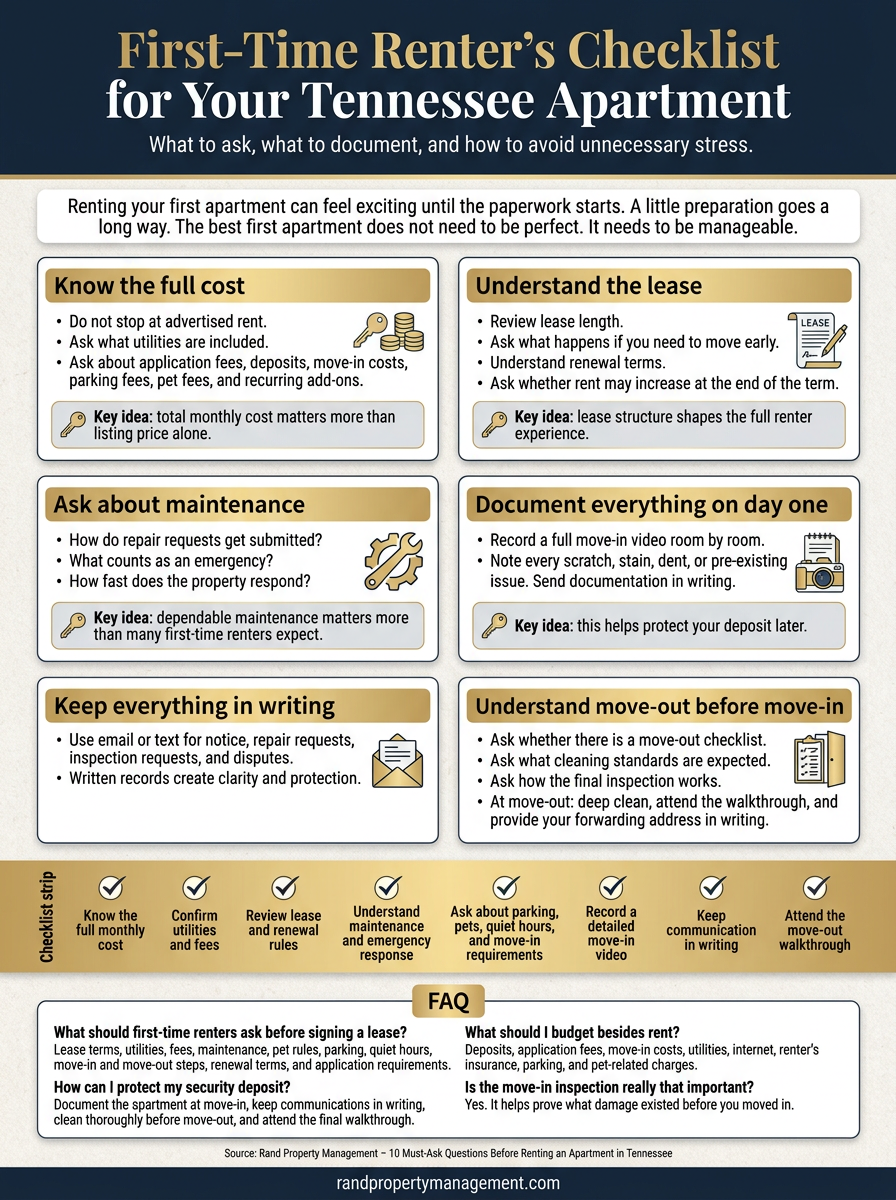
First-Time Renter Checklist
Make sure you know the full monthly cost, not just the advertised rent.
Ask exactly what utilities and fees are included.
Review the lease term, renewal process, and early termination rules.
Understand the maintenance process and emergency response policy.
Ask about parking, pet rules, quiet hours, and move-in requirements.
Record a detailed video at move-in and save it.
Keep all communication in writing.
Attend the move-out walkthrough and document the apartment again before leaving.
FAQ
What should first-time renters ask before signing a lease?
Ask about lease terms, included utilities, extra fees, maintenance, pet rules, parking, quiet hours, move-in and move-out procedures, renewal terms, and application requirements.
How can I protect my security deposit?
Document the apartment at move-in, keep communications in writing, clean thoroughly before move-out, and attend the final walkthrough.
What should I budget besides rent?
Include deposits, application fees, move-in costs, utilities, internet, renter’s insurance, parking, and pet-related charges if applicable.
Is the move-in inspection really that important?
Yes. It helps prove what damage existed before you moved in, which can prevent unfair charges later.
Sources