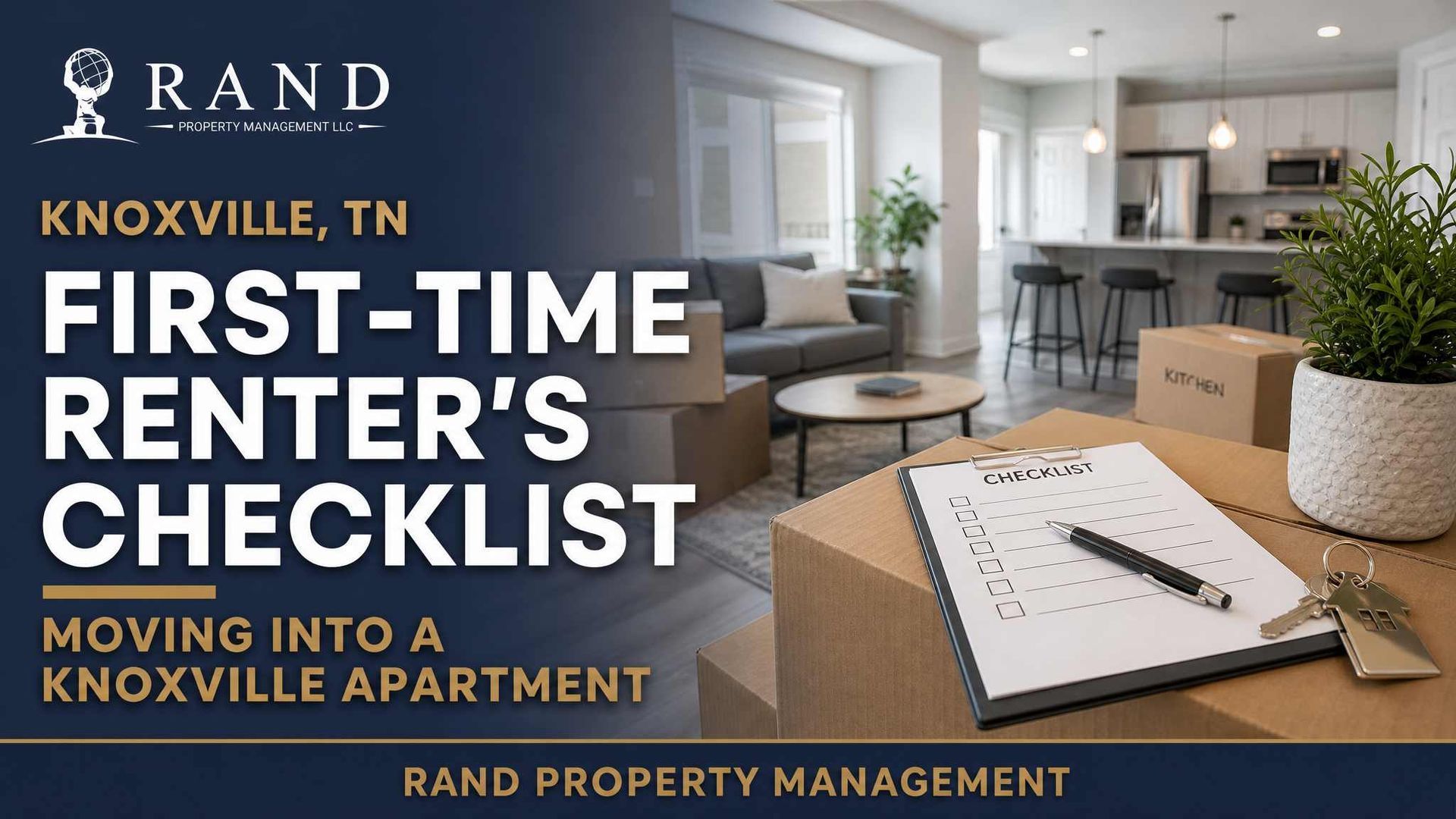
First-Time Renter's Checklist for Moving into a Knoxville Apartment
Quick Answer
Moving into your first apartment in Knoxville, TN involves more steps than most first-time renters anticipate — from confirming income requirements and gathering documentation before applying, to completing a thorough move-in inspection on day one, setting up utilities, and understanding your lease before you sign it. The checklist in this guide covers every stage of the process in the order it happens — so nothing gets missed, nothing gets assumed, and your first
Knoxville apartment experience starts on the strongest possible footing. Rand Property Management communities across Knoxville and East Tennessee are designed to make this process straightforward for first-time renters — with professional leasing teams, clear application processes, and 24/7 emergency maintenance that gives new renters the support they need from move-in day forward.
Moving into your first apartment is one of those life transitions that looks straightforward from the outside and reveals its complexity from the inside. The application process has requirements that first-time renters don’t always know about in advance. The lease is a legal document that most people sign without reading fully. The move-in inspection — the most important thing you do on day one — is something most first-time renters skip entirely and regret later. The utility setup, the renter’s insurance requirement, and the basic logistics of transferring your life into a new space all require specific actions that no one automatically knows how to execute.
This checklist covers every stage of the first-time renter process in Knoxville, Tennessee — from the moment you start your apartment search through the first week of your tenancy. It is written for the renter who has never done this before and wants to do it right, and for the renter who has started the process and wants to make sure they have not missed anything important.
Rand Property Management’s communities across Knoxville — including Rocky View Apartment Homes, Rand Willoway, Breckenridge Apartments, Hickory Hill, and others — are specifically well-suited to first-time renters because the professional management infrastructure, clear leasing process, and 24/7 emergency maintenance support make the transition into independent apartment living as smooth as the process allows.
Stage One: Before You Start Looking
The most common first-time renter mistake is starting the apartment search before doing the financial and logistical groundwork that determines which apartments you will actually qualify for. Here is what to do before you look at a single listing.
Know Your Actual Budget
The budget question is not what rent you can afford in isolation — it is what rent you can afford within the full context of your monthly expenses. Rent is typically the largest single line item in a monthly budget, but it does not exist alone.
Utilities — electricity, gas, water, internet — typically add $100 to $200 per month on top of rent in Knoxville depending on the season and the unit size. Renter’s insurance — which most Knoxville landlords require — runs $15 to $30 per month.
Parking fees, pet fees, and any applicable community fees are additional. Your effective monthly housing cost is rent plus all of these — and your budget calculation needs to reflect the full number rather than the rent line alone.
The standard income requirement for Knoxville apartments is 2.5 to 3 times the monthly rent in gross income. Know your monthly gross income before you start searching, and identify the rent range you qualify for at that ratio. Applying for apartments you do not financially qualify for wastes time on both sides of the leasing relationship.
Check Your Credit
Property managers in Knoxville run credit checks as part of the standard application process. Most require a credit score above 580 to 620 for standard approval. If you are a first-time renter, you may have limited credit history rather than negative credit history — a distinction that some property managers handle differently than established poor credit. Check your credit score before you apply using a free service — Credit Karma, Experian, or the annual free credit report at
AnnualCreditReport.com — so you know what the application will reveal rather than discovering it during the process.
If your credit is limited or lower than the standard threshold, identify a potential co-signer before you begin applying. A co-signer with qualifying income and credit can make the difference between an approval and a decline, and having that conversation in advance is significantly easier than having it after an application has already been submitted and declined.
Identify a Co-Signer If Needed
A co-signer is a financially qualified person — typically a parent, guardian, or close family member — who agrees to be legally responsible for the lease obligations if you fail to meet them. Most Knoxville property managers accept co-signers for applications that fall short of standard income or credit requirements. The co-signer will need to provide the same documentation as the primary applicant — income verification, ID, and credit check authorization — so confirm their willingness and their availability to provide documentation before you begin.
Gather Your Documentation
Having your documentation ready before you apply is the single most effective way to move quickly when you find the right apartment. In Knoxville’s rental market — particularly at well-managed communities like Rand’s — desirable units lease quickly and the applicant who submits a complete application first has a meaningful advantage.
The documentation you need for a standard Knoxville apartment application includes a valid government-issued photo ID, your Social Security number for the credit check, two to three recent pay stubs showing current income, two to three months of bank statements, contact information for your current and previous landlords if applicable, and pet documentation including vaccination records if you have animals.
If you are a recent graduate, a first-time worker, or someone with non-traditional income — freelance, gig work, self-employment — prepare documentation that demonstrates your income specifically: tax returns, bank statements showing consistent deposits, or a letter from an employer confirming a pending start date and salary.
Stage Two: The Apartment Search
Define Your Non-Negotiables
Every apartment search involves tradeoffs, and understanding your actual priorities before you begin helps you make faster, better decisions when you are touring. The non-negotiables are the features whose absence disqualifies a unit regardless of what else it offers — a pet-friendly policy if you have a dog, a specific school zone if you have children, a maximum commute time to your workplace, an absolute budget ceiling.
The preferences are the features you want but can negotiate on — in-unit washer/dryer connections versus on-site laundry, a specific neighborhood versus a nearby neighborhood, a ground-floor unit versus an upper-floor unit. Knowing the difference between your non-negotiables and your preferences prevents the common first-time renter error of eliminating good options based on negotiable preferences while spending time on options that fail the non-negotiables.
Research the Management Company
First-time renters frequently research the apartment and overlook the management company — which is the entity that will determine the actual quality of your living experience throughout the lease. The apartment’s finishes and location are fixed. The management company’s maintenance responsiveness, communication quality, and community environment standards are what determine whether those finishes are maintained, whether your requests are addressed promptly, and whether the community you toured is the community you live in twelve months later.
For Knoxville first-time renters, Rand Property Management’s communities offer the combination of professional management infrastructure, 24/7 emergency maintenance, and established leasing processes that make the first-time renter transition significantly smoother than alternatives that rely on less attentive management.
Visit Multiple Units Before Deciding
The first apartment you tour is almost never the right apartment — not because it is necessarily wrong but because the frame of reference a single tour provides is insufficient for a confident decision. Tour at least three units before submitting an application. Your evaluation criteria clarify and your confidence in the decision increases significantly with comparative context.
When you tour, bring this checklist. Walk every room. Test every appliance. Look at the storage. Assess the natural light at the time of day that reflects your typical home schedule. Look at the parking situation and confirm where your specific space is. Ask about the laundry situation, the maintenance process, and any current move-in specials that may reduce your upfront cost.
Ask the Right Questions on Every Tour
The questions that first-time renters most frequently forget to ask — and most frequently wish they had asked — are the ones that reveal the practical reality of daily life in the apartment rather than the presentation quality of the tour itself.
Ask what utilities are included in the rent and which are separate. Ask how the maintenance request process works and what the typical response time is. Ask what the pet policy covers in terms of breed restrictions, fees, and deposit structure.
Ask whether the parking space you will use is assigned or first-come-first-served. Ask whether there have been any recent noise, pest, or maintenance issues in the building or unit. Ask what the move-out process looks like and what the most common deposit deduction reasons are. Ask about any upcoming lease changes, rent increases, or community changes that are planned for the coming year.
These questions do not make you a difficult applicant — they make you an informed one, and a good property manager will answer them directly.
Stage Three: The Application and Approval
Submit a Complete Application
A complete application — one with all required documentation attached, all fields filled accurately, and the application fee included — processes faster than an incomplete one. Property managers who receive complete applications can run the credit and background check immediately rather than waiting for missing items. In a competitive rental market, the difference between a complete application submitted today and an incomplete application submitted today can be the difference between the unit being held for you or offered to the next applicant.
Double-check your application before submitting. Confirm that your income figure reflects gross rather than net income. Confirm that your rental history is accurate. Confirm that your emergency contact information is filled in. Confirm that any pet information — breed, weight, vaccination status — is included and accurate.
Understand the Credit and Background Check
Once you submit your application, the property manager will run a credit check and a background check. The credit check evaluates your credit score, your payment history, and any prior rental-related collections or evictions. The background check evaluates criminal history and prior eviction records.
If you have concerns about either of these checks based on your history, address them proactively with the leasing agent before submitting rather than after a decline. Many property managers — including Rand — can advise you on how specific items in your history may affect the application outcome and what documentation or circumstances might address those concerns, such as a co-signer, additional deposit, or an explanation letter.
Read the Lease Before You Sign
The single most important thing a first-time renter can do before move-in is read the entire lease before signing it. Not skim it. Read it.
The lease is the legal document that governs every aspect of your tenancy — rent amount and due date, late fee structure and grace period, lease term and renewal conditions, maintenance request procedures, guest policy, noise and conduct rules, pet addendum terms, parking terms, move-out notice requirements, and the security deposit conditions that will
determine whether you receive your deposit back when you leave.
The sections that first-time renters most frequently overlook and most frequently wish they had read are the late fee and grace period clause, the move-out notice requirement, the security deposit conditions and what constitutes normal wear versus chargeable damage, the guest policy and any restrictions on extended guest stays, and any clauses about lease-breaking fees if you need to exit the lease early.
If any section is unclear, ask the leasing agent to explain it before you sign. A property manager who is unwilling to clarify lease terms before signing is giving you information about how they will handle disputes during the tenancy. A good leasing team at a professionally managed community will answer every question clearly and without impatience.
Pay Your Security Deposit Promptly
Once your application is approved, pay your security deposit promptly to secure the unit. At many Knoxville communities, the unit remains available to other applicants until the deposit is received — approval alone does not hold the unit. If you are moving from another market or have a delayed timeline, ask the leasing team how long they can hold the unit and whether any holding deposit arrangement is available.
Ask about move-in specials before paying. Many Rand communities offer reduced deposit promotions, first month free offers, or other incentives for qualified applicants — particularly in slower leasing seasons. The question costs nothing and the answer can meaningfully reduce your upfront move-in costs.
Stage Four: Before Move-In Day
Set Up Your Utilities
Utility setup is one of the most commonly delayed move-in tasks and one of the most consequential to get wrong. Arriving at your new apartment without electricity, internet, or gas because the service transfer was not completed is an avoidable problem that requires only a few phone calls in advance.
In Knoxville, electricity is provided by Knoxville Utilities Board — KUB — for most addresses within the city. Contact KUB at kub.org to establish a new account in your name or transfer an existing one. Gas service is also available through KUB for most Knoxville addresses. Internet service providers in Knoxville include AT&T, Xfinity, and other regional options — contact your preferred provider at least two weeks before move-in to schedule installation and confirm equipment availability.
Water and sewer service at most Knoxville apartment communities is included in rent or billed through the property — confirm with your leasing agent before setting up a separate water account.
Purchase Renter’s Insurance
Renter’s insurance is required at most professionally managed Knoxville apartment communities — including Rand communities — and is one of the most important financial protections a first-time renter can have. It is not expensive — a standard policy covering personal property, liability, and additional living expenses runs $15 to $30 per month in the
Knoxville market — and what it covers is far more valuable than its cost.
Your renter’s insurance covers your personal belongings — furniture, electronics, clothing, appliances you own — in the event of theft, fire, water damage from a neighboring unit, or other covered loss. It covers your personal liability if someone is injured in your apartment. And it covers additional living expenses if you are displaced from your unit due to a covered event.
Your landlord’s insurance covers the building structure — not your belongings. Without renter’s insurance, a fire in your building that destroys your furniture, electronics, and clothing leaves you with no covered path to replacement. With renter’s insurance at $20 per month, that same event triggers a claim that replaces your possessions.
Purchase renter’s insurance before move-in day. Most Knoxville property managers require proof of coverage at or before key pickup. Providers available directly online include State Farm, Lemonade, and Allstate — the application process takes less than fifteen minutes and coverage is typically effective the same day.
Arrange Your Moving Logistics
Confirm your moving date and time with the leasing office. Ask whether the community has any specific policies about moving truck access, elevator reservation if applicable, or timing restrictions on move-in activity. Schedule your moving help — whether hired movers or friends — in advance and confirm the address and unit details with them specifically.
Measure your furniture and your new apartment’s doorways, stairwells if applicable, and elevator dimensions if applicable before move-in day. The most common preventable moving-day problem is furniture that does not fit through an entry point — a problem that is identified and solved during the planning phase and becomes an expensive, time-consuming problem when discovered on moving day.
Pack a first-night essentials box that you carry separately from the main move — phone charger, toiletries, a change of clothes, bedding, medications, important documents, and any essentials for pets or children. The first night in a new apartment frequently involves delayed access to specific packed items, and having the essentials immediately accessible eliminates the most common first-night frustration.
Update Your Address
Notify the USPS of your new address at least two weeks before move-in using the online mail forwarding service at usps.com. Update your address with your bank, employer, insurance providers, subscription services, and any government agencies — including the Tennessee DMV if your driver’s license reflects your previous address.
In Tennessee, you are required to update your driver’s license address within 30 days of moving to a new address. Visit the Tennessee DMV online at tn.gov/safety/driver-services for the update process, which can be completed online for most standard address changes.
Stage Five: Move-In Day
Complete Your Move-In Inspection — Do Not Skip This
The move-in inspection is the most important thing you do on move-in day — more important than unboxing, more important than furniture placement, more important than any other first-day activity. First-time renters skip it more often than any other checklist item, and it is the skip they most frequently regret when move-out day arrives and they are charged for damage that was present before their tenancy began.
Your property manager will provide a move-in inspection form — a document that lists every area of the apartment and asks you to note the condition of each. Fill this out completely, in person, walking every room of the unit before you bring in a single box.
Document every pre-existing condition you find. A scuff on the living room wall. A scratch in the kitchen counter. A bathroom fixture that does not operate perfectly. A stain on the carpet. A dent in an appliance. Every one of these items, documented on the inspection form and supported by dated photographs, is a pre-existing condition that cannot be charged against your security deposit at move-out. Every one of these items that goes undocumented is a potential deposit deduction that you will have no basis to dispute.
Photograph every room before your furniture goes in. Photograph every noted condition specifically. Submit your completed inspection form to the leasing office and keep a copy — email yourself a copy so it is timestamped and accessible from anywhere. This documentation is the single most important move-in-day protection a first-time renter has.
Test Every Appliance and System
Before the moving truck leaves and your first-day help disperses, test every appliance and system in the apartment. Every stove burner. The oven. The refrigerator temperature. The dishwasher. Every light switch and electrical outlet. Every faucet — check water pressure and temperature. Both shower and bathtub if present. Every toilet. Every window and its ability to open, close, and lock. Every door lock. The HVAC system — run both heat and cooling regardless of the season. The washer/dryer connections if present.
Any issue you identify on move-in day should be reported to the leasing office immediately, in writing, with documentation. A property manager who knows about an issue from day one cannot dispute its pre-tenancy nature. An issue discovered two months into a lease with no documentation of when it began is a disputed repair responsibility.
Save Emergency Contact Information
Save the leasing office number, the maintenance request number, and the 24/7 emergency maintenance number in your phone before you leave the leasing office on move-in day. For Rand Property Management communities, the 24/7 emergency maintenance line is the number you call when something goes wrong outside of business hours — knowing where it is before you need it is the specific preparation that first-time renters most frequently skip and most appreciate having done when the moment arrives.
Introduce Yourself to Your Neighbors
This is optional but consistently recommended by long-term renters as one of the most valuable first-week actions. A brief introduction to the neighbors immediately adjacent to your unit establishes a positive relationship baseline that shapes the tenor of any future interaction — whether that is borrowing a cup of something, asking for a package to be accepted during a delivery, or navigating a noise or shared-space issue that requires communication rather than a management call.
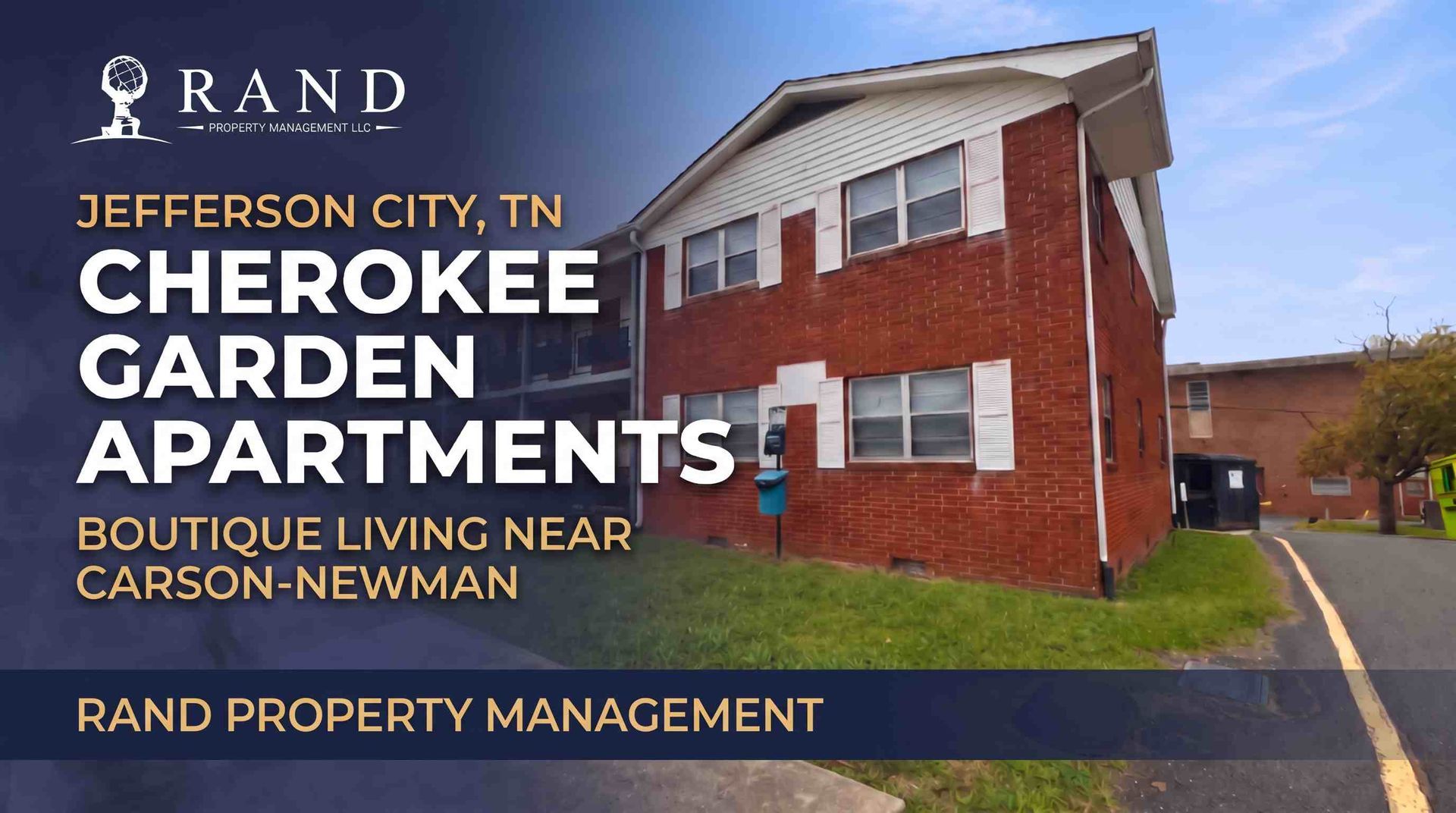
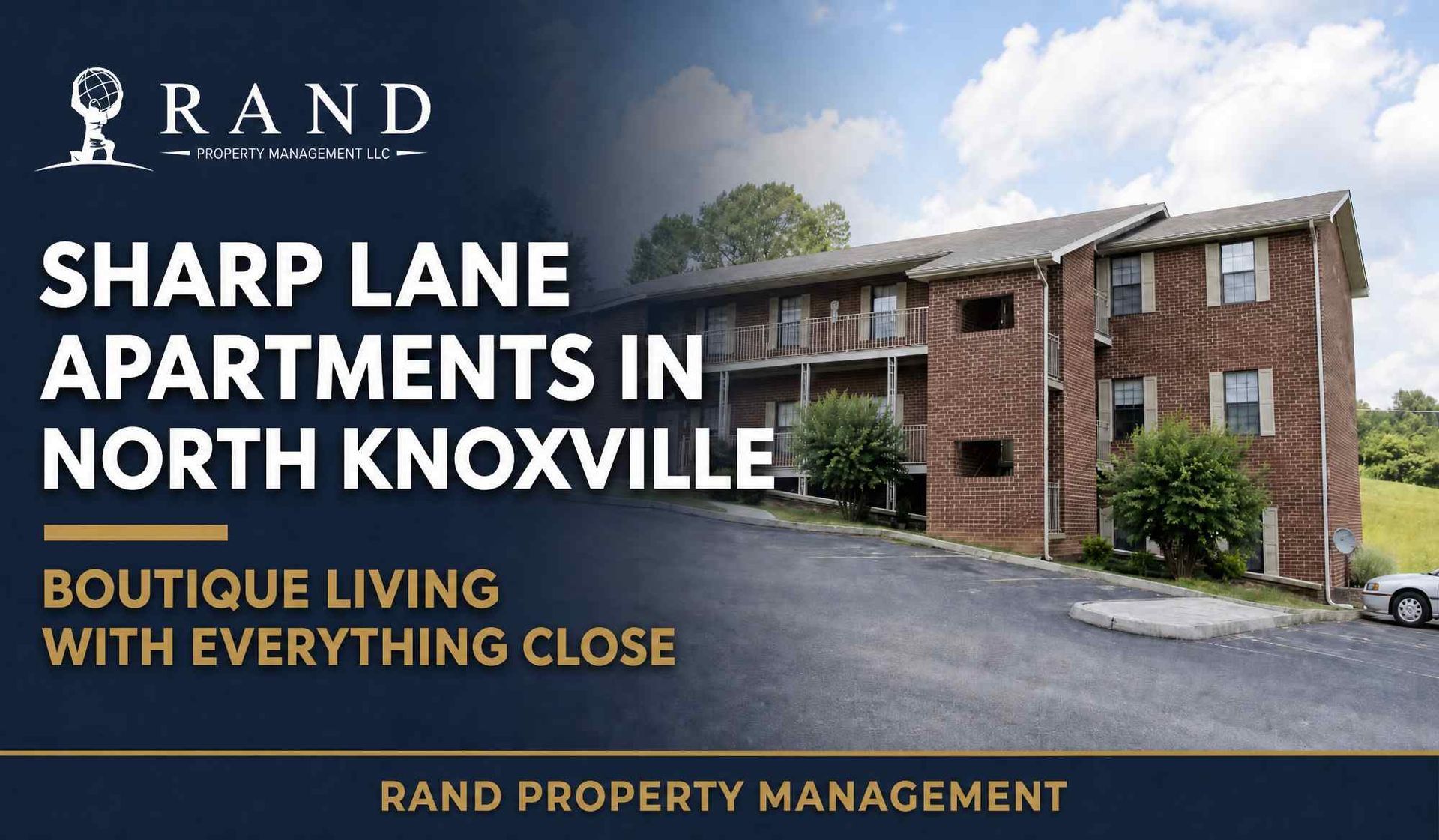
In Rand communities — particularly the smaller boutique communities like Cherokee Garden and Sharp Lane where the residential scale makes neighbor relationships natural — a brief introduction is the simplest way to convert a new address into a genuine community experience from the first week of your tenancy.
Stage Six: The First Week
Submit a Non-Emergency Maintenance Request for Any Issues Found
Beyond the move-in inspection documentation, any non-urgent maintenance items — a door hinge that needs adjustment, a faucet with lower than ideal pressure, a cabinet that does not close cleanly — should be submitted through the property’s maintenance request process during your first week. Getting these items into the system early establishes a maintenance record and ensures they are addressed before they become more significant issues.
At Rand communities, the maintenance request process is straightforward — the leasing team can walk you through the specific process at your community during the move-in appointment.
Set Up a Rent Payment Method
Confirm the rent payment method your property accepts — online portal, check, bank transfer, or other — and set it up before your first payment is due. Missing the first rent payment due to a payment method setup delay is an avoidable first-month friction that sets a tone you do not want to establish with your property manager. At most Rand communities, an online payment portal is available for convenient monthly payment — confirm the setup process with the leasing team during move-in.
Know Your Lease Dates
Know your lease start date, your lease end date, and the notice period required for renewal or non-renewal. Most Knoxville leases require 30 to 60 days advance written notice if you do not intend to renew — missing this window can result in automatic lease renewal or month-to-month extension at an adjusted rate. Put your lease end date and the required notice date in your phone calendar on move-in day so the renewal decision is not a surprise twelve months later.
Familiarize Yourself with the Community Rules
Read the community rules section of your lease and any attached addenda during your first week. Community rules at professionally managed Knoxville communities like Rand’s cover quiet hours, parking policies, guest policies, trash and recycling procedures, and conduct standards that shape the daily community experience for all residents. Knowing them in the first week prevents the unintentional violations that first-time renters sometimes commit through unfamiliarity rather than disregard.
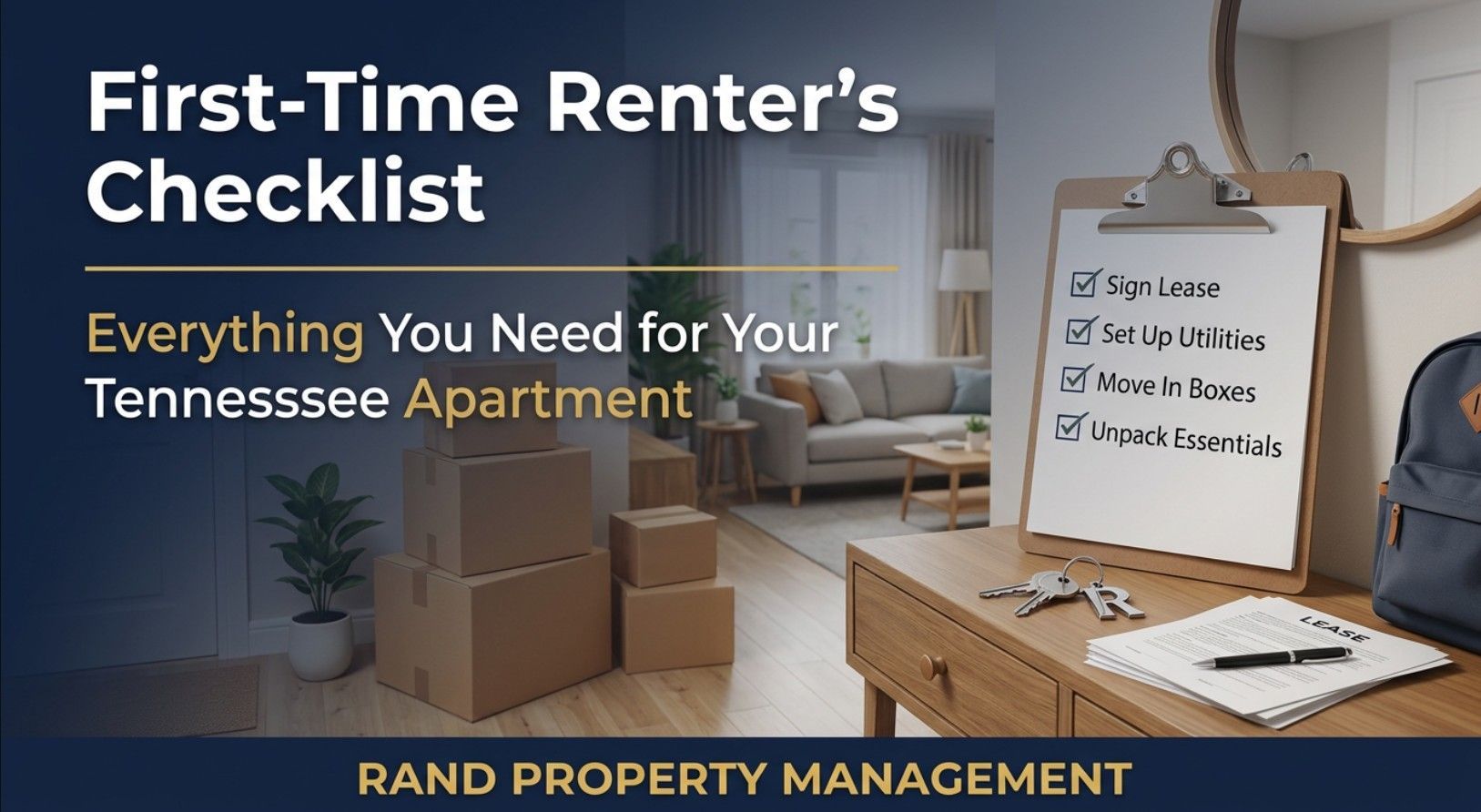
The Complete First-Time Renter Checklist at a Glance
Before You Look:
Know your gross monthly income and the rent range you qualify for. Check your credit score. Identify a co-signer if needed. Gather ID, pay stubs, bank statements, and pet documentation.
During Your Search:
Define your non-negotiables versus negotiable preferences. Research the management company. Tour at least three units. Ask about utilities, maintenance process, parking, and move-out procedures on every tour.
Application and Approval:
Submit a complete application with all documentation. Understand what the credit and background check will review. Read the entire lease before signing. Pay your security deposit promptly and ask about move-in specials.
Before Move-In:
Set up KUB electricity and gas. Arrange internet installation. Purchase renter’s insurance. Update your address with USPS, your bank, employer, and the Tennessee DMV. Measure furniture against doorways and entry points. Pack a first-night essentials box.
Move-In Day:
Complete the move-in inspection form thoroughly — photograph every room and every noted condition. Test every appliance and system. Submit the completed inspection form to the leasing office and keep a copy. Save the 24/7 emergency maintenance number. Introduce yourself to adjacent neighbors.
First Week:
Submit non-emergency maintenance requests for any minor issues found. Set up your rent payment method before the first payment is due. Record your lease end date and required notice date in your calendar. Read and familiarize yourself with the community rules.
Rand Property Management: The Right Starting Point for Knoxville First-Time Renters
First-time renters benefit from professionally managed communities more than any other renter segment — because the leasing process, the maintenance infrastructure, and the community management standards that professional management provides are the specific supports that first-time renters most need during a transition they have not navigated before.
Rand Property Management operates communities across Knoxville — including Rocky View Apartment Homes, Rand Willoway, Breckenridge Apartments, Hickory Hill, Rand at Sutherland, and others — with consistent professional management standards, clear and transparent leasing processes, 24/7 emergency maintenance coverage, pet-friendly policies, and the community environment quality that makes a first apartment experience genuinely positive rather than a series of problems to navigate.
For first-time renters who are beginning their Knoxville apartment search, contacting the Rand leasing team directly is the most efficient starting point — a single conversation covers available floor plans across multiple communities, current move-in specials, application requirements, and the specific details that make the decision concrete rather than abstract.
Visit randpropertymanagement.com/community-directory to browse current availability across all Rand East Tennessee communities and find the starting point for your first Knoxville apartment.
Frequently Asked Questions — First-Time Renters in Knoxville, TN
What income do I need to rent an apartment in Knoxville, TN?
Most Knoxville property managers require gross monthly income of 2.5 to 3 times the monthly rent. For a $1,100 per month apartment, that means demonstrating $2,750 to $3,300 per month in verifiable gross income. If your income falls below this threshold, a co-signer with qualifying income can make the application viable at many communities including Rand’s.
What credit score do I need to rent my first apartment in Knoxville?
Most Knoxville property managers look for a credit score above 580 to 620 for standard approval. First-time renters often have limited credit history rather than negative credit history — check your score before applying so you know what the application will show. If your score or history is a concern, discuss it with the leasing team before applying rather than after a decline.
Do I need renter’s insurance for a Knoxville apartment?
Most professionally managed Knoxville apartment communities — including all Rand Property Management communities — require renter’s insurance as a condition of the lease. Policies run $15 to $30 per month and cover your personal belongings, personal liability, and additional living expenses. Purchase it before move-in day and provide proof of coverage to the leasing office at or before key pickup.
What is a move-in inspection and why does it matter?
A move-in inspection is a documented walkthrough of your apartment on move-in day that records the condition of every area before your tenancy begins. It protects you from being charged for damage that existed before you moved in. Complete it thoroughly, photograph every room and every noted condition, submit the form to the leasing office, and keep a copy. It is the most important thing you do on move-in day.
How do I set up utilities in Knoxville, TN?
Electricity and gas for most Knoxville addresses are provided by Knoxville Utilities Board at kub.org. Contact KUB at least two weeks before move-in to establish a new account. Internet service providers include AT&T and Xfinity — schedule installation two weeks in advance. Confirm with your leasing agent whether water and sewer are included in your rent or billed separately before setting up additional accounts.
What should I do if something breaks in my Knoxville apartment?
For non-emergency issues, submit a maintenance request through the property’s designated process — most Rand communities have an online portal. For emergencies — plumbing failures, HVAC outages, electrical issues, security concerns — use the 24/7 emergency maintenance line. Save this number in your phone on move-in day so you have it when you need it. Rand Property Management’s 24/7 emergency coverage means urgent issues are addressed regardless of the hour.
How much notice do I need to give before moving out of a Knoxville apartment?
Most Knoxville apartment leases require 30 to 60 days written notice before the lease end date if you do not intend to renew. Check your specific lease for the exact requirement and record the notice deadline in your calendar on move-in day — missing this window can result in automatic renewal or month-to-month extension at an adjusted rate.